English
 Español



Cleaning an Outdoor Plastic Waste Bin rarely feels the same from one moment to another. Sometimes water alone removes most of the residue, sometimes the inner walls hold onto a thin layer that takes longer to loosen. The difference usually comes from what has been placed inside, how long it stayed there, and how moisture behaved during that period.
Waste does not remain static once it enters the bin. Even after disposal, slow changes continue inside the closed space. Moisture spreads, small particles shift, and certain materials begin to break down. Over time, those changes leave traces on the plastic surface, and those traces decide how cleaning will go later.
What Makes Outdoor Plastic Waste Bin Cleaning Difficulty Vary
Cleaning difficulty does not come from a single cause. It builds up through repeated use and the interaction between waste type and internal conditions. A bin that handles mainly dry waste behaves very differently from one exposed to food scraps or liquid residue.
Common influences behind cleaning variation include:
- wet waste leaving thin coating on inner walls
- organic material slowly breaking down after disposal
- mixed waste creating uneven residue layers
- liquid leakage settling at the bottom area
- long storage time increasing surface attachment
When moisture stays inside, it does not just evaporate quickly. It interacts with the plastic wall, forming a soft film that spreads quietly across the surface. That film becomes the starting point of later cleaning difficulty.
How Plastic Surface Structure Affects Dirt Adhesion
Inside an Outdoor Plastic Waste Bin, the surface may appear smooth, yet small irregularities still exist. These tiny surface variations affect how waste residue attaches and spreads over time.
Typical surface behavior includes:
- light residue sticking more after repeated contact
- moisture helping particles spread across inner walls
- temperature shifts changing how firmly residue holds
- odor particles settling into micro surface gaps
- thin film forming after repeated wet waste contact
Once a layer forms, water does not always remove it in one pass. Instead, it breaks gradually, especially in areas where residue has been sitting longer.
What Factors Make Internal Cleaning Easier or Harder
Internal structure quietly controls how cleaning progresses. Simple shapes allow water to reach most areas, while complex shapes create hidden zones where residue tends to stay longer.
Cleaning behavior is often shaped by:
- corner depth inside the bin
- base shape and drainage path
- wall curvature and flow direction
- lid sealing effect on air movement
- ability to tilt or rotate during rinsing
Corners usually hold the most residue. Liquid waste and fine particles settle there naturally, and water flow often struggles to fully clear those areas in one rinse.
How Waste Type Changes Cleaning Effort
Different waste types leave different traces. Some remain loose and easy to remove, while others form sticky layers that cling to surfaces.
| Waste Type | Residue Behavior | Cleaning Effort | Common Result |
|---|---|---|---|
| Dry waste | Loose particles | Low | Easy rinse |
| Wet organic waste | Sticky coating | Higher | Odor + film |
| Mixed waste | Layered residue | Medium–High | Uneven buildup |
| Liquid waste | Spread marks | Higher | Deep adhesion |
Wet organic material usually creates the strongest residue layer. As it sits, it begins to break down and spread, forming a coating that does not rinse away easily.
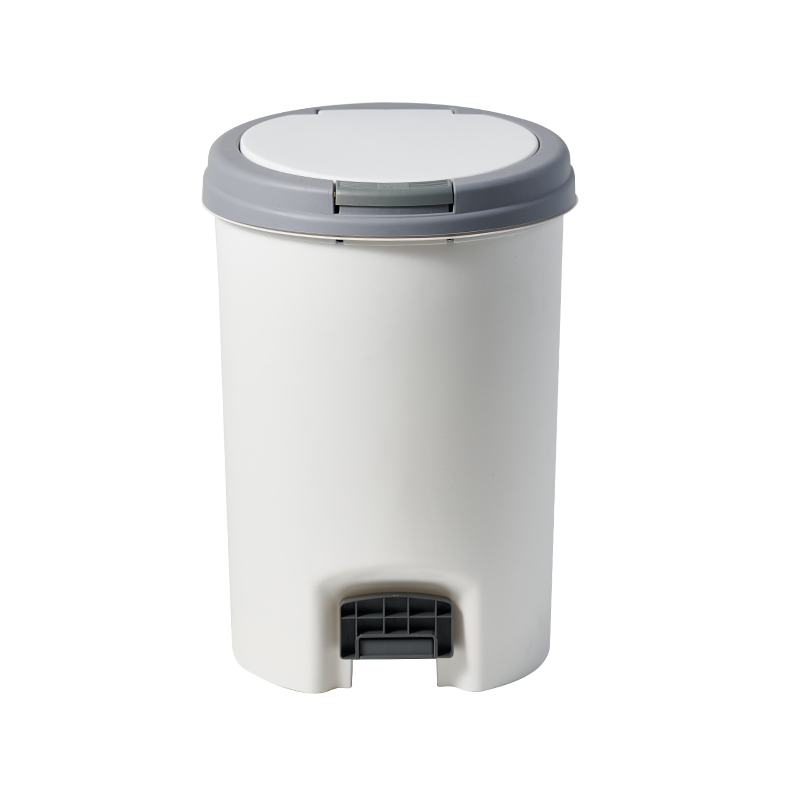
How Water Flow and Rinsing Method Influence Cleaning
Water plays a central role in cleaning an Outdoor Plastic Waste Bin, yet the way it moves inside the container changes the result. Strong direct flow removes loose debris quickly, while slower rinsing helps loosen stuck layers.
Typical water behavior during cleaning:
- direct flow clears loose waste quickly
- angled rinsing reaches wall surfaces more evenly
- repeated flushing weakens sticky layers
- low pressure allows gradual separation of residue
- poor drainage leaves moisture in corner zones
When water does not circulate well, residue tends to remain in hidden areas and slowly builds up again over time.
Cleaning does not really stop after water is poured out. The bin can look rinsed, yet small wet patches often stay in corners or along the base. Those hidden spots slowly decide what happens next time waste is added. A thin layer of moisture, left behind without notice, is enough for new residue to settle again.
Outdoor conditions keep shifting in a quiet way. Sun hits one side, shade covers another, air moves differently across the day. The bin sits in all of that without pause. Cleaning results change along with those shifts, even when the washing method stays exactly the same.
Role of Cleaning Agents in Plastic Bin Maintenance
Water handles loose dirt well, yet some residue stays attached after rinsing. Mild cleaning solutions step in at that point, not by force, more by loosening what has already clung to the surface.
What often happens during use:
- residue softens after short contact time
- odor trapped in thin film starts to fade
- sticky patches lose grip on plastic wall
- rinsing becomes less demanding afterward
Foam tends to stay on vertical surfaces longer than plain water. That extra time matters. It allows the layer to break down slowly before anything is scrubbed or washed away.
How Bin Design Influences Cleaning Convenience
Inside shape quietly controls how cleaning feels. Water always follows the path that space allows, so small design details end up deciding where residue gathers and where it leaves easily.
Common structural effects:
- smooth inner walls reduce places where waste holds
- rounded corners let water move without interruption
- wide openings make rinsing less restricted
- stiff inner lines may trap small leftover particles
- lid shape changes how air and moisture behave inside
When the interior is simple, water reaches more areas in one pass. When shape becomes more complex, some spots keep holding onto residue longer than expected.
How Routine Maintenance Shapes Long-Term Cleanliness
Cleaning effort depends a lot on timing. If waste sits too long, it changes inside the bin. If it is removed regularly, residue never gets enough time to settle into a firm layer.
Simple habits often change the outcome:
- emptying before waste breaks down fully
- quick rinse after heavy use days
- keeping interior dry before closing lid
- avoiding liquid buildup at the bottom
- repeating light cleaning instead of long gaps
Over time, regular care keeps surfaces from developing thick layers. What remains is usually light enough to wash away without extra effort.
How Environmental Conditions Affect Cleaning Process
Outdoor placement means constant exposure to changing surroundings. Nothing stays stable for long. Heat, shade, moisture, and wind all shift how residue behaves inside the bin.
Typical influence patterns:
- warmth helps moisture leave faster after washing
- cooler air slows down drying inside corners
- sunlight reduces smell over time on exposed surfaces
- rain sometimes washes light dirt off outer walls
- moving air helps leftover moisture disappear
Even when cleaning method stays the same, results feel different depending on these small environmental changes.
How Usage Habits Influence Cleaning Effort
Daily handling leaves a stronger mark than expected. Not from one action, but from repetition. Small choices add up inside the bin over time.
Common patterns that shape cleanliness:
- separating dry and wet waste reduces inner film buildup
- liners reduce direct contact with plastic surface
- lid use limits moisture entering from outside air
- avoiding overfill reduces spill risk
- early wipe of leaks prevents spread inside corners
Once habits stay steady, residue has fewer chances to form thick layers. Cleaning turns into a short rinse rather than a heavy task that needs repeated scrubbing.
An Outdoor Plastic Waste Bin does not stay in one condition. It moves between cleaner and slightly heavier states depending on how it is used and maintained. Nothing dramatic happens at once. Changes build slowly.
When waste is managed with regular emptying and light rinsing, the inner surface stays close to its original state for longer. When moisture stays inside and waste sits too long, thin layers begin to appear and slowly spread.
Over time, one pattern becomes clear without needing explanation: small maintenance steps keep cleaning simple, while long gaps allow residue to settle and stay longer on the surface.
 Previous